
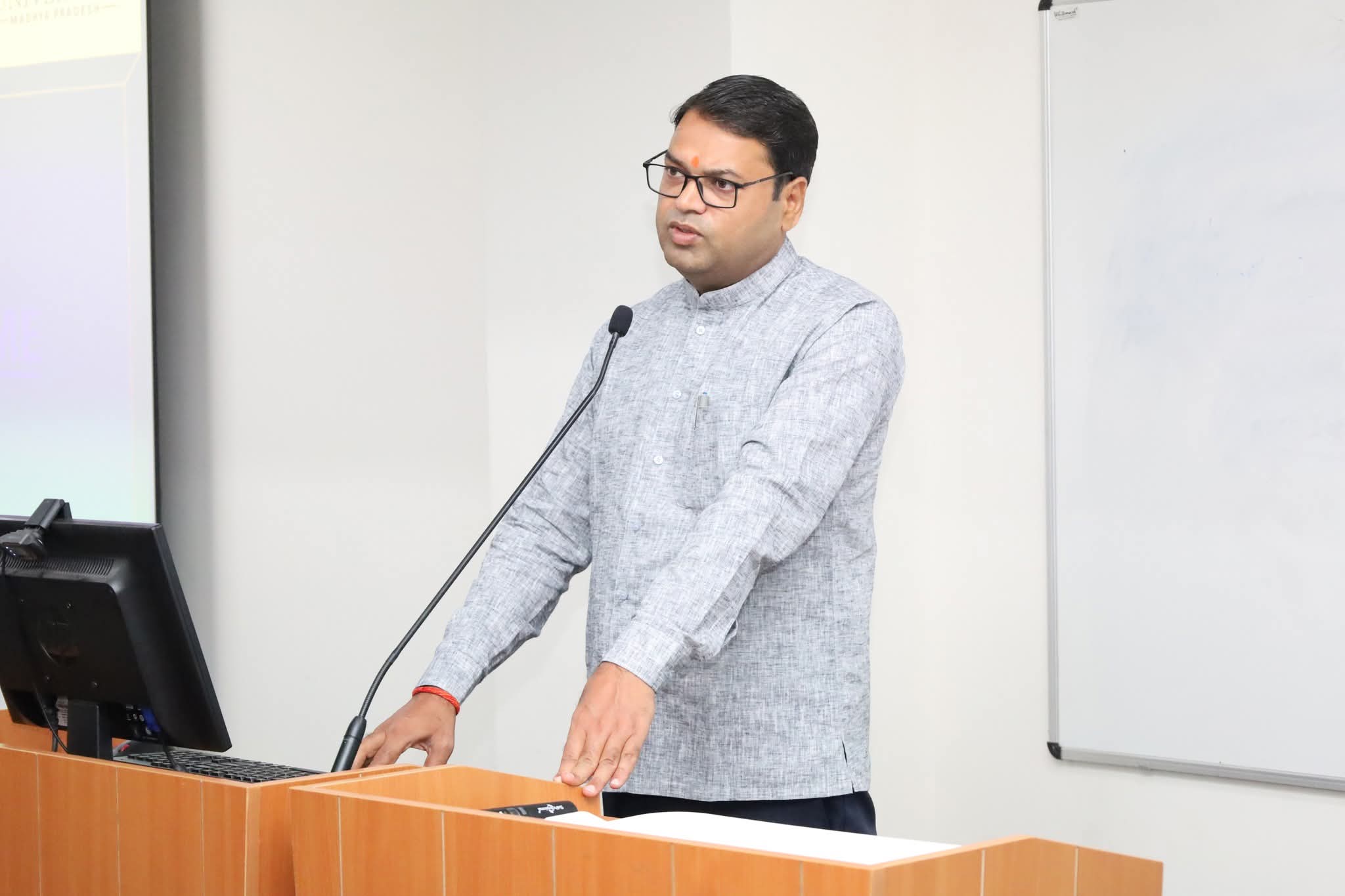
Dr. Harishankar Singh Kansana: A Life Dedicated to Youth Development, Social Service, and Nation Building
Dr. Harishankar Singh Kansana is a distinguished academician, social worker, and youth mentor presently serving as Divisional Programme Coordinator of the National Service Scheme (NSS) at Jiwaji University, Gwalior, Madhya Pradesh, and as National Secretary of Ganga Mahasabha. An Assistant Professor of Political Science with expertise in Pandit Deendayal Upadhyay’s philosophy of Ekatm Manavdarshan (Integral Humanism), he has dedicated his career to youth empowerment, community participation, and social development. Through his leadership across the Gwalior-Chambal region, he has inspired thousands of students through civic engagement, blood donation campaigns, rural outreach, and nation-building initiatives. In recognition of his exceptional humanitarian contribution, he was honoured with the Utkrist Seva Samman 2026 by the Hon’ble Governor of Madhya Pradesh through the Indian Red Cross Society.
Early Academic Orientation and Intellectual Foundation
Dr. Harishankar Singh Kansana belongs to that generation of educators who view knowledge as a tool for social reconstruction. Trained in Political Science and serving as Assistant Professor in the discipline, his academic engagement has remained deeply connected to India’s indigenous political and philosophical traditions.
His intellectual specialization in Pandit Deendayal Upadhyay’s Ekatm Manavdarshan has significantly shaped his educational and social approach. Integral Humanism emphasizes the harmonious development of the individual, society, and nation by balancing material progress with ethical and cultural values.
For Dr. Kansana, this philosophy is not limited to classroom discussion; it is translated into practical community engagement. His educational and social interventions consistently emphasize human dignity, social harmony, collective participation, and national development rooted in cultural consciousness.
This synthesis of scholarship and social action has made him not only a teacher of Political Science but also a guide for value-based leadership among young people.
Leadership in National Service Scheme (NSS)
At present, Dr. Harishankar Singh Kansana serves as Divisional Programme Coordinator of the National Service Scheme (NSS) at Jiwaji University, Gwalior. In this capacity, he oversees youth engagement and service activities across eight districts of the Gwalior-Chambal division of Madhya Pradesh.
The National Service Scheme occupies a unique place within India’s educational framework. Established with the objective of developing the personality of students through community participation, NSS encourages youth to understand societal challenges and actively contribute toward solutions.
Under Dr. Kansana’s leadership, NSS activities have evolved into a comprehensive model of experiential learning and social transformation.
His coordination includes planning, implementation, monitoring, and mentoring of large-scale youth participation initiatives involving colleges and educational institutions across the division. These programmes connect students directly with communities and encourage active citizenship.
Rather than viewing volunteerism as occasional charity, Dr. Kansana promotes the idea that service must become an enduring social responsibility.
His work demonstrates that universities can function as dynamic centres of social change.
Youth Development Through Community Participation
One of the most significant aspects of Dr. Kansana’s contribution is his sustained focus on youth development.
India’s demographic profile presents immense opportunities through its young population. However, this potential can only be realized through meaningful engagement, character development, and civic responsibility.
Through NSS programmes, Dr. Kansana has consistently encouraged students to participate in:
- Community development activities
- Rural outreach programmes
- Civic awareness campaigns
- Environmental conservation initiatives
- Health and sanitation drives
- Social inclusion programmes
- Volunteer leadership activities
His philosophy of youth engagement goes beyond event management.
He emphasizes that community participation develops empathy, discipline, communication skills, leadership qualities, and democratic values.
Students under his guidance often experience direct interaction with local communities, enabling them to understand real social challenges and develop practical problem-solving abilities.
This approach creates not merely educated graduates but socially responsible citizens.
Blood Donation and Humanitarian Initiatives
Among the most impactful dimensions of Dr. Kansana’s public service has been his contribution to humanitarian causes, particularly blood donation awareness and mobilization.
Through sustained motivation campaigns, awareness drives, and volunteer coordination, thousands of units of blood have reportedly been mobilized through youth participation and institutional engagement.
Blood donation campaigns require more than logistical planning; they demand public trust, awareness building, and sustained volunteer motivation.
Dr. Kansana’s ability to inspire students and institutions toward such causes reflects his commitment to service-oriented leadership.
His humanitarian work extends to multiple areas including:
- Health awareness initiatives
- Volunteer mobilization
- Community assistance programmes
- Civic engagement activities
- Educational outreach
- Public awareness campaigns
These initiatives have strengthened the culture of social responsibility among students and educational institutions in the region.

Recognition Through Utkrist Seva Samman 2026
Recognition becomes meaningful when it reflects sustained public contribution.
In acknowledgment of his exceptional humanitarian service and social contribution, Dr. Harishankar Singh Kansana received the Utkrist Seva Samman 2026 from the Madhya Pradesh Red Cross Society.
The award was conferred by the Hon’ble Governor of Madhya Pradesh in Bhopal in recognition of his distinguished contribution to humanitarian service and social welfare.
This honour reflects not a single achievement but years of dedicated public engagement.
The recognition also symbolizes the important role educational leaders can play in strengthening civil society.
By connecting educational institutions with social service initiatives, Dr. Kansana has demonstrated how academic leadership can produce measurable public impact.
Role in Higher Education and Policy Engagement
Apart from his operational responsibilities in NSS, Dr. Kansana contributes to educational governance and academic development through broader institutional involvement.
He serves as a distinguished member of the NSS Central Board of Studies constituted by the Higher Education Department, Government of Madhya Pradesh.
Such responsibilities involve shaping educational frameworks and strengthening the integration of value education, service learning, and youth participation.
His involvement in policy and advisory functions reflects confidence in his academic insight and practical experience.
Through these platforms, he contributes to discussions concerning:
- Youth development frameworks
- Educational outreach strategies
- Community engagement models
- Social responsibility programmes
- Institutional leadership practices
This policy engagement enhances the impact of his work beyond individual institutions.
Advisory Role Across Educational Institutions
An important dimension of Dr. Kansana’s influence lies in his advisory engagement.
He is associated with advisory committees of more than 200 educational institutions across the Gwalior-Chambal division.
This wide institutional involvement allows him to mentor educators, guide administrators, and support student-focused initiatives at a regional scale.
His advisory contributions often focus on:
- Student leadership development
- Community outreach planning
- NSS implementation frameworks
- Value-based education
- Volunteer engagement systems
- Institutional social responsibility
Through this network, ideas and practices developed within one institution often expand across multiple campuses.
This multiplier effect significantly enhances the social reach of educational initiatives.
Commitment to Rural Development and Adarsh Gram Initiatives
Dr. Kansana’s social engagement extends deeply into rural development.
He has shown particular interest in Adarsh Gram initiatives implemented through dialogue-oriented community engagement programmes.
The concept emphasizes sustainable village development through local participation and social cooperation.
His work in this area reflects a belief that meaningful development emerges through communication, trust-building, and collective action.
By involving students in rural engagement programmes, he creates opportunities for experiential learning while contributing to community advancement.
Such initiatives encourage students to understand:
- Rural governance structures
- Local social dynamics
- Grassroots development challenges
- Community participation methods
- Sustainable development practices
This integration of youth and rural development creates mutual learning and long-term social value.
Thought Leadership Through Public Speaking
Beyond administrative and academic responsibilities, Dr. Kansana is widely recognized as a youth motivator and public speaker.
Educational institutions frequently invite him for motivational sessions, lectures, seminars, and youth development programmes.
His sessions often combine:
- Educational insight
- Social awareness
- National development perspectives
- Ethical leadership principles
- Youth empowerment strategies
His ability to connect philosophical ideas with practical action makes his lectures relevant to contemporary student audiences.
He encourages youth not merely to seek personal advancement but to cultivate public responsibility and constructive citizenship.
His engagements often inspire participants to view social service as an essential dimension of personal growth.

National Secretary, Ganga Mahasabha: Cultural and Social Engagement
In addition to his academic and NSS leadership roles, Dr. Kansana serves as National Secretary of Ganga Mahasabha.
This role reflects his wider engagement with social and cultural initiatives connected to public awareness, social values, and community participation.
His involvement demonstrates a broader understanding of nation-building that includes cultural continuity, environmental consciousness, and social harmony.
Such responsibilities complement his academic identity and reinforce his commitment to public service.
Contribution Through Writing and Public Discourse
Dr. Kansana has also contributed to intellectual and public discourse through his published writings.
Many of his articles have appeared in national newspapers and magazines.
Writing provides an important medium for extending educational influence beyond institutional settings.
His published work often reflects themes such as:
- Youth empowerment
- National development
- Social participation
- Educational values
- Political thought
- Community engagement
Through these contributions, he participates in shaping public conversations on social and educational issues.
Academic writing and public communication together strengthen his identity as a scholar engaged with society.
Aligning Youth Participation with Viksit Bharat 2047
A notable feature of Dr. Kansana’s work is alignment with national aspirations such as Viksit Bharat 2047.
This vision emphasizes inclusive growth, civic participation, innovation, and responsible citizenship.
Through NSS initiatives and student engagement programmes, he encourages young people to see themselves as active contributors to India’s future.
His approach suggests that development cannot be achieved through policy alone.
It requires:
- Social responsibility
- Volunteerism
- Ethical leadership
- Community participation
- Human-centred education
By creating opportunities for youth involvement in real-world social initiatives, he helps translate national goals into local action.
Philosophy of Service-Centred Leadership
Examining Dr. Kansana’s work reveals a consistent philosophy: leadership must emerge through service.
His career reflects an understanding that institutions become meaningful only when they strengthen communities.
Whether through blood donation campaigns, student development, rural outreach, public lectures, or academic engagement, his efforts demonstrate a service-centred model of leadership.
This perspective resonates strongly with Indian intellectual traditions where education and social responsibility are interconnected.
His work also shows that public institutions can become engines of social transformation when guided by committed individuals.
Impact on Students and Society
The long-term significance of Dr. Kansana’s contribution can be measured through the generations of students influenced by his work.
Students exposed to service learning often develop:
- Greater social awareness
- Leadership confidence
- Ethical sensitivity
- Civic responsibility
- Collaborative skills
Many of these students carry these values into their professions and communities.
This creates a multiplier effect in which educational intervention produces broader social outcomes.
Through institutional leadership and personal mentorship, Dr. Kansana has contributed to creating such developmental pathways.
Conclusion
Dr. Harishankar Singh Kansana represents a distinctive blend of academic excellence, social commitment, youth leadership, and public service.
As Divisional Programme Coordinator of NSS at Jiwaji University, National Secretary of Ganga Mahasabha, Assistant Professor of Political Science, scholar of Integral Humanism, humanitarian, writer, and public intellectual, he has consistently worked to connect education with societal transformation.
His leadership across eight districts of the Gwalior-Chambal division, his contribution to blood donation and humanitarian initiatives, his advisory role in educational institutions, and his commitment to youth empowerment illustrate a life dedicated to service.
Recognition through the Utkrist Seva Samman 2026 further underscores the significance of his contribution.
At a time when societies seek models of responsible leadership and meaningful youth engagement, Dr. Kansana’s work demonstrates that educational institutions can become powerful platforms for community development and nation-building.
His journey continues to inspire students, educators, and social workers to embrace service not merely as an activity, but as a way of life.


