
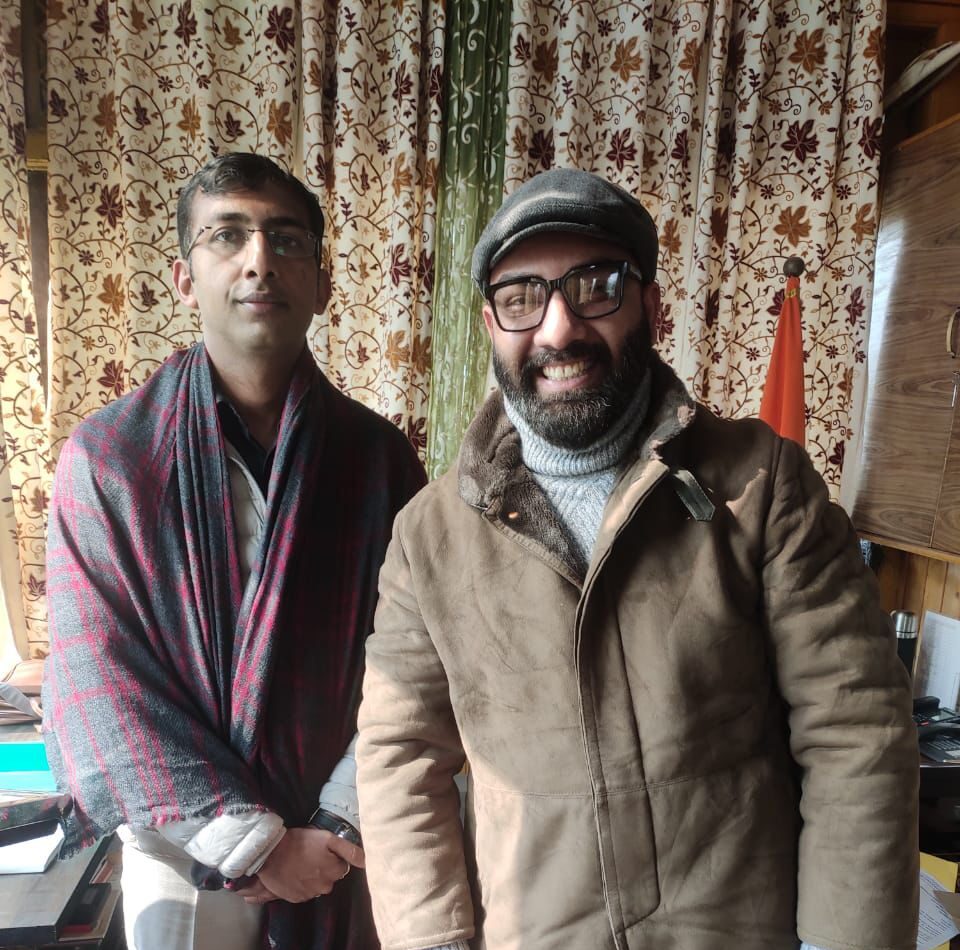
Abdul Qayum War is an Indian human rights activist, legal professional, animal welfare advocate, and social worker from Srinagar, Jammu and Kashmir. Born on 24 March 1988, he has built a reputation as a disciplined, fearless, and principled activist whose work bridges law, social reform, and humanitarian service. Serving as the National Director (India) of the Human Rights International Federation (HRIF), he has played a crucial role in expanding human rights awareness, strengthening cooperation with administrative and law-enforcement institutions, and promoting ethical governance across the country. His life and work represent a rare integration of legal knowledge, grassroots activism, and compassionate service, especially in regions facing persistent social and structural challenges.
Early Life and Social Environment
Abdul Qayum War was born and raised in Srinagar, Jammu and Kashmir, a region known for its natural beauty as well as its long-standing social and political complexities. Growing up in this environment exposed him early to issues of injustice, human rights violations, and social vulnerability. The everyday realities of conflict, administrative gaps, and social crimes shaped his worldview and instilled in him a deep sense of responsibility toward society. Rather than becoming desensitized to these challenges, he developed an early inclination toward helping people navigate legal systems and assert their rights.
His formative years were marked by close observation of how ordinary citizens—particularly women, children, and marginalized groups—often lacked access to justice and awareness of legal remedies. These experiences played a foundational role in shaping his future path as a human rights defender and social reformer.
Education and Legal Foundation
Abdul Qayum War pursued higher education in law, earning a degree in Law and Social Crime from Alisan University. His academic background provided him with a structured understanding of legal frameworks, criminal justice systems, and constitutional values. Unlike many who limit legal education to courtroom practice, War viewed law as a social tool—one that could be used to educate, empower, and protect communities.
During his academic years, he actively engaged in legal literacy initiatives, focusing on simplifying legal concepts for the general public. His education strengthened his ability to approach social issues not only from a moral standpoint but also through lawful, evidence-based, and institutional mechanisms. This combination of legal training and social commitment became a defining feature of his professional identity.
Entry into Human Rights and Social Work
War’s formal entry into human rights activism was driven by his desire to confront social crimes and institutional failures through lawful means. He began working on cases related to domestic violence, corruption, abuse of authority, and violations of basic human rights. His approach was firm yet procedural, emphasizing documentation, legal remedies, and accountability rather than confrontation alone.
Over time, he became known for his zero-tolerance attitude toward law-breaking, particularly in cases involving violence against women and misuse of power. His work consistently stressed that justice must operate within the framework of the law, ensuring both fairness and sustainability.
Human Rights Awareness and Legal Literacy
A major component of Abdul Qayum War’s contribution lies in public education and awareness. He has conducted and coordinated numerous programs aimed at informing citizens about their rights and responsibilities. These initiatives have covered a wide range of topics, including constitutional values, human rights principles, and social crime prevention.
With the introduction of new criminal laws in India, particularly the Bharatiya Nyaya Sanhita (BNS), War played an active role in explaining these reforms to students, NGOs, and community members. His sessions focused on clarity and accessibility, breaking down complex legal language into understandable concepts. This emphasis on education reflects his belief that an informed society is the strongest safeguard against injustice.
Cooperation with Administration and Law Enforcement
Unlike activists who position themselves strictly in opposition to institutions, Abdul Qayum War has consistently advocated cooperation between civil society, administration, and police. He believes that meaningful reform requires constructive engagement rather than constant confrontation. Through HRIF and independent initiatives, he has supported police vigilance programs, administrative cooperation, and joint awareness campaigns.
This approach has helped build trust between communities and institutions, particularly in sensitive regions where mistrust often prevails. By encouraging lawful conduct on both sides, War has contributed to strengthening governance and accountability.
Leadership in Human Rights International Federation (HRIF)
Abdul Qayum War currently serves as the National Director (India) of the Human Rights International Federation (HRIF). His journey within the organization began at the district level in Srinagar, followed by his appointment as State Director, before assuming national leadership. Under his guidance, HRIF has expanded its reach significantly.
Today, HRIF operates across 28 states and 8 Union Territories of India, supported by a network of more than 100,000 members, volunteers, and supporters. The organization conducts legal awareness camps, seminars, public programs, and community outreach initiatives aimed at promoting human rights and social responsibility. War’s leadership emphasizes discipline, ethical conduct, and institutional cooperation, positioning HRIF as a credible civil society platform.

Commitment to Women Empowerment
Women empowerment has been a central focus of Abdul Qayum War’s social initiatives. He has organized and supported numerous programs addressing women’s education, legal rights, safety, and social inclusion. These initiatives often include seminars, exhibitions, and awareness campaigns designed to reach women from marginalized and economically weaker backgrounds.
By offering many of these programs free of cost, War ensured accessibility and inclusivity. His work consistently highlights the importance of legal awareness in empowering women to resist domestic violence, discrimination, and exploitation.
Animal Welfare and Compassionate Service
Beyond human rights, Abdul Qayum War has made significant contributions to animal welfare. His involvement in animal protection reflects a broader ethical philosophy that values compassion across all forms of life. Over the years, he has participated in rescue operations, rehabilitation efforts, vaccination drives, and public health initiatives related to animal welfare.
It is estimated that he has contributed to the rescue, treatment, and protection of more than 6,000 to 7,000 animals, including injured, abandoned, and vulnerable animals. His work includes collaboration with national and international organizations such as Mission Rabies, Worldwide Veterinary Service, Mad Dogs Trust, Blue Cross of India, and Dogs Trust India. These efforts demonstrate his commitment to humane treatment and public health, especially in relation to stray animal management and rabies prevention.

Fabulous Kashmir Initiative
Within the human rights framework, Abdul Qayum War is associated with the “Fabulous Kashmir” initiative, a platform linked with HRIF that focuses on social, cultural, and awareness-based events. The initiative supports programs related to human rights education, women empowerment, and community development, while also highlighting the positive social potential of the region.

Justice Era Book and Legal Education
Abdul Qayum War is the lead contributor to the book Justice Era, written in collaboration with his team. The publication focuses on human rights and the new criminal laws of India, particularly the Bharatiya Nyaya Sanhita. Designed as an educational resource, the book aims to simplify legal concepts for students, NGOs, educational institutions, and the general public. It reflects War’s long-standing commitment to legal literacy and rights-based education.
Awards and Recognition
War’s work has been recognized nationally and internationally through several awards and honors. These include the Nelson Mandela Inspire Award (2025), an honorary Nobel Award (2024) conferred by the Global Human Rights Trust India, the Universal Icon Award, the Rashtriya Ratna Award, and recognition from the World Book of Records, London. These accolades acknowledge his sustained contributions to human rights advocacy, social service, and animal welfare.
Public Image and Ethical Approach
Abdul Qayum War is widely regarded as a disciplined and principled activist. He is often described as fearless, loyal to his mission, and uncompromising in matters of law and ethics. His zero-tolerance stance toward corruption, domestic violence, and social injustice has earned him respect as well as criticism, yet he remains steadfast in his belief that justice must be pursued without favoritism or fear.

Personal Life and Ongoing Work
Based in Srinagar, Jammu and Kashmir, Abdul Qayum War continues to work actively in national and international human rights and animal welfare initiatives. His life reflects a rare balance between legal professionalism, social activism, and compassionate service. Through his leadership, advocacy, and education efforts, he continues to contribute meaningfully to the pursuit of justice, dignity, and humane values in India.


