
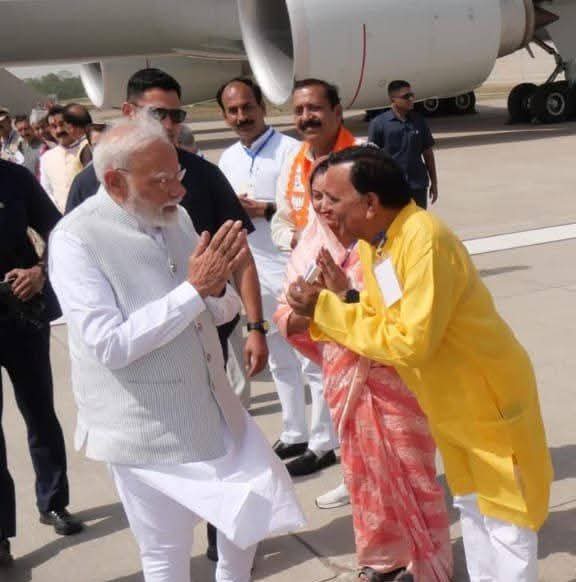
Shri Sitaram Batham: A Journey of Struggle, Service, and Social Upliftment Through Nationalist Ideology
Shri Sitaram Batham is a dedicated social worker, nationalist thinker, and skilled organization builder who emerged from the Kevat community, rising through adversity to become a symbol of service-oriented politics. With unwavering commitment to the ideals of Rashtrabhakti (patriotism) and social upliftment, he played a pivotal role in strengthening grassroots political organization through the Bharatiya Janata Party. From his early days as a pracharak to holding positions like Organization Minister and Chairman of the Fisheries Welfare Board with cabinet rank, Shri Batham devoted his life to empowering marginalized communities, especially the extremely backward sections of society, turning his struggle into a lifelong mission of service to Maa Bharati.
Humble Beginnings and the Seed of Struggle
Shri Sitaram Batham was born into the Kevat community—one that has historically remained on the margins of mainstream society, battling poverty, neglect, and lack of representation. His early life was marked by severe hardships, where even the basic necessities of life were scarce. Yet, these challenges became the foundation for a life dedicated to social justice and national service. From a young age, he exhibited an unwavering resolve to rise above these conditions—not merely for himself, but to bring along his community and every person living under similar constraints.
He drew his strength from the cultural and spiritual heritage of India, particularly from the epic tale of Lord Ram. Just like the legendary Kevat who served Lord Ram with humility and faith, Sitaram Batham imbibed the values of devotion, service, and courage. However, he redefined that service—not through mythology but through ground-level action, leadership, and organization.
The Ideological Backbone – Nationalism and Organizational Discipline
One of the defining features of Shri Batham’s life was his deep-rooted belief in nationalism. For him, nationalism was not merely a political ideology, but a way of life—an everyday commitment to uplift the nation by empowering its most backward citizens. He found resonance in the ideological principles of the Rashtriya Swayamsevak Sangh (RSS) and the Bharatiya Janata Party (BJP), both of which offered him a platform to serve on a broader scale.
His entry into the life of a pracharak (a full-time propagator of nationalist values) was not accidental. It was a natural progression for someone so deeply committed to organizational discipline and social change. His journey as a pracharak involved rigorous dedication, traveling across regions, living minimally, and influencing hearts and minds—not with speeches, but with sincere deeds. His organizational abilities soon made him a vital figure within the ranks, and he was entrusted with responsibilities that required leadership, foresight, and people-connect.
Rising Through the Ranks – From Pracharak to Organization Minister
Shri Batham’s work as a pracharak led to him becoming the Sangathan Mantri (Organization Minister) within the BJP ranks. This position is crucial in Indian political structure, for it determines the ideological and structural spine of the party at the grassroots level. Unlike the glamour associated with electoral politics, the role of an organization minister is grounded, intense, and mostly away from the limelight.
He worked relentlessly to expand the party’s reach into rural and backward areas, ensuring that the BJP’s message was not limited to urban centers. His organizational strategies always emphasized inclusivity—bringing in members from SC/ST, OBC, and extremely marginalized communities, empowering them politically, and offering them platforms to raise their voices.
His focus remained steadfast: how can the party become a vehicle of change for the last man in the queue? His leadership was not limited to policy but extended to hand-holding candidates, mentoring young karyakartas (workers), and resolving ground-level issues through participative leadership.
A Champion of the Kevat Community
Shri Sitaram Batham never forgot his roots. Despite rising through the ranks of the political and ideological spectrum, he remained deeply connected to the Kevat community—a community historically known for its association with rivers and boats, yet largely left behind in the race for development.
Recognizing their neglect, he took upon himself the mission to uplift this community—not just economically, but also socially and politically. He ran extensive awareness campaigns to awaken the youth of the Kevat samaj, encouraging them to take education seriously, participate in governance, and claim their rightful place in society.
He also advocated for reservation, government support, and special schemes targeting the fishing and boating communities. His efforts culminated in his appointment as the Chairman of the Fisheries Welfare Board (Matsya Palan Kalyan Board), a position that allowed him to initiate concrete changes.
As Chairman, Shri Batham did not treat the post as ceremonial. He used it as a platform to push for progressive reforms—ensuring welfare schemes reached the fishermen, launching insurance and livelihood programs, and facilitating better infrastructure for the riverine populations. His leadership was instrumental in highlighting the contribution of the Kevatand related communities in the socio-economic fabric of India.
Recognition and Responsibility – Ministerial Rank and Beyond
His commitment, efficiency, and connection with the grassroots did not go unnoticed. Recognizing his contributions, he was accorded Cabinet Minister status, a significant milestone in a journey that began from the bottommost rung of society. But for Shri Sitaram Batham, such recognition was never about personal glory. Instead, it became yet another opportunity to serve with greater energy and resources.
With ministerial authority came larger responsibilities, and Shri Batham expanded his work beyond his community. He worked to streamline welfare programs, ensuring transparency and effective implementation. His style of working remained people-centric, often visiting rural belts, directly interacting with beneficiaries, and checking the performance of schemes.
He launched initiatives focused on skill development, women empowerment, financial inclusion, and youth employment, always tailoring them to fit the unique challenges faced by backward and river-based communities. Through each of these interventions, his vision remained singular—to bring the marginalized into the mainstream.
Politics as a Tool of Service, Not Power
Unlike many who enter politics for authority or status, Shri Sitaram Batham used politics as a platform for societal transformation. His style of politics was not about slogans or populism; it was about deep engagement, structural change, and ideological grounding.
He believed that politics should be a sacred tool to serve Bharat Mata, not a means of personal gain. His conduct reflected this ethos—simple lifestyle, integrity in public dealings, and absolute commitment to organizational discipline. His humility and accessibility made him a beloved figure across party lines, often sought after for guidance and mediation.
Even while holding high posts, he remained closely connected to the BJP karyakartas at the booth level. He would often say, “Sangathan mein jode raho, jameen se jude raho” (Stay connected with the organization, stay grounded to the people). This philosophy made him a true organizational sculptor—ek kushal sangathan shilpi.
Legacy and Inspirational Value
Today, Shri Sitaram Batham’s life story is not just that of one man’s rise; it is a beacon for every individual who dares to dream of changing society through service, hard work, and ideological commitment. His journey from modest beginnings in the Kevat community to holding ministerial status is nothing short of legendary. But more than personal achievement, it is the number of lives he transformed, the communities he uplifted, and the values he stood for that define his legacy.
He symbolizes how selfless struggle, when coupled with a nationalist vision, can result in a life that not only achieves greatness but also radiates inspiration for generations to come. His model of leadership emphasizes inclusion, ethics, and people-centric development, elements sorely needed in today’s political discourse.
Conclusion
In a time when politics is often associated with opportunism and self-interest, the life and work of Shri Sitaram Bathamserve as a refreshing reminder of what true public service means. From the muddy shores of neglected riversides to the corridors of political power, his journey has been a pilgrimage of sacrifice, service, and upliftment.
He brought dignity to the Kevat community, voice to the voiceless, and structure to the ideology of nationalism through his impeccable organizational acumen. He did not just represent a community or a party—he embodied a mission, one rooted in Rashtra bhakti, samaj seva, and sangathan shakti.
His life compels us to believe that real change comes not through grand speeches but through tireless action, rooted in conviction and guided by values. Shri Sitaram Batham will always be remembered as a true karmayogi, a servant leader, and a nationalist visionary, whose legacy will continue to inspire countless individuals across Bharat.


