
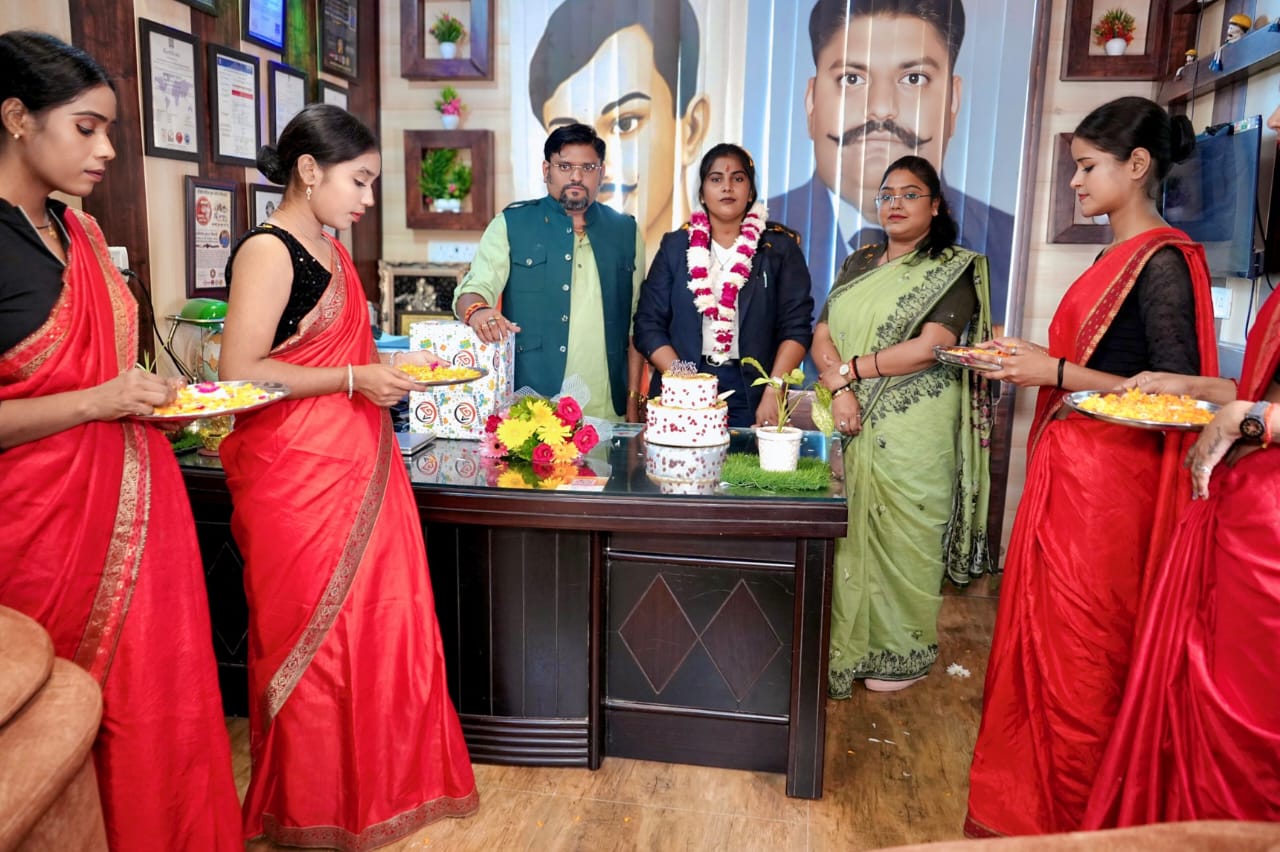
LUCKNOW, UTTAR PRADESH: The journey from military service to entrepreneurship often requires more than a change in profession. It demands a new understanding of leadership, a willingness to take calculated risks and the ability to translate years of experience into a different working environment. For Abhishek Kumar Tripathi, an Indian Air Force veteran and founder of MG Construction and General Order Supplier, this transition has become the foundation of a career that combines business development, housing, community engagement and social responsibility.
Born on July 15, 1984, in Kannauj, Uttar Pradesh, Tripathi spent approximately two decades in the Indian Air Force before entering the business sector. His professional journey since then has centred on building an enterprise in Lucknow while maintaining his association with veteran welfare and charitable activities. Rather than treating business and social service as entirely separate pursuits, he has sought to develop both alongside the personal values that shaped his earlier years.
His experience offers an interesting perspective on the changing role of military veterans in civilian life, particularly those who choose entrepreneurship as a way to apply their organisational experience, discipline and practical understanding of people’s needs.
From Military Experience to Independent Enterprise
Tripathi joined the Indian Air Force in 2001, beginning a professional chapter that would influence his outlook for years to come. The demands of military service helped establish his approach to discipline, teamwork, accountability and time management. These qualities later became relevant when he began navigating the uncertainties of entrepreneurship, where success depends on both individual decisions and the effective coordination of an entire organisation.
His academic background, which includes a Bachelor of Arts, an LLB and an MBA in Material Management, further contributed to his professional development. His education provided exposure to legal principles, management practices and resource planning, while his military experience offered practical lessons in working within structured systems and accepting responsibility for outcomes.
After completing his Air Force career, Tripathi chose to enter the construction industry. In 2022, he established MG Construction and General Order Supplier in Lucknow, beginning a new phase that required him to apply his existing skills to a competitive commercial environment.
The transition was significant because entrepreneurship offered a different kind of responsibility. In military service, an individual operates within an established institution; in business, an entrepreneur must develop systems, build relationships, manage resources and establish a reputation through consistent performance. Tripathi’s second career has involved adapting to precisely these demands.
MG Construction: Developing Trust Alongside Infrastructure
Construction is an industry in which the quality of a finished project is only one measure of success. Clients also consider communication, financial clarity, project management and the confidence that their requirements will be respected. These considerations are particularly important when a residential property represents a family’s principal investment or when a commercial project is closely tied to someone’s livelihood.
MG Construction operates across residential and commercial construction, with related architectural planning and interior design services. Under Tripathi’s entrepreneurial vision, the business has focused on quality, transparency and organised execution.
His approach reflects an understanding that construction projects require coordination among clients, architects, engineers, suppliers and workers. Materials must be managed carefully, budgets monitored and timelines coordinated. A breakdown in communication or planning can affect the entire process, making accountability an essential part of professional practice.
Tripathi’s objective is to develop a business that clients can approach with confidence and that can grow through its ability to meet expectations. This requires not only technical execution but also an organisational culture in which commitments are taken seriously.
His background in material management is relevant to this work, particularly because procurement, resource allocation and cost control influence both the efficiency and financial viability of construction projects. Combined with the discipline developed during military service, this knowledge forms part of the foundation on which he has built his business.
Housing as a Long-Term Aspiration
One of the personal influences behind Tripathi’s interest in construction is his understanding of the housing challenges experienced by defence personnel and service-class families. During military service, frequent postings and transfers can make it difficult for families to establish a permanent home. Although circumstances differ from one family to another, housing often remains a significant long-term aspiration for those whose professional lives involve mobility.
Having experienced military life himself, Tripathi understands why a dependable home can represent more than property ownership. It provides a sense of continuity, security and belonging, particularly for families that have spent years adapting to changing locations.
This perspective has influenced his interest in practical and budget-conscious housing solutions. Through MG Construction, he has sought to connect his professional work with the aspirations of families looking for reliable construction services.
The connection between his military past and entrepreneurial present was illustrated when an MG Construction-built home was handed over to a fellow Air Force officer who had completed two decades of service. The occasion brought together two experiences that have shaped Tripathi’s life: serving in the armed forces and subsequently entering the business of building homes.
For a former serviceman to help another officer achieve an important housing milestone created a meaningful connection between personal experience and professional purpose. It also demonstrated how knowledge gained during one career can influence the opportunities an individual chooses to pursue in another.
A Broader Vision for Entrepreneurship
While construction remains central to Tripathi’s professional profile, his ambitions extend towards developing additional business opportunities. His wider entrepreneurial vision includes ventures that respond to practical consumer needs, create employment and establish relationships among businesses, suppliers and local communities.
MG Pansari forms part of this broader vision, with plans focused on everyday household essentials and consumer products. The concept reflects an interest in a sector closely connected to routine needs, although its long-term success will depend on implementation, product quality, supply-chain reliability and the ability to build customer confidence.
Expanding into additional sectors requires a different set of operational considerations. A construction business and a consumer-products venture operate under different market conditions, and each requires its own systems for managing costs, customers and distribution. Effective growth therefore depends on careful planning rather than expansion alone.
Tripathi’s broader ambitions indicate an interest in building an enterprise with multiple avenues of activity. Employment generation and the development of sustainable commercial operations form part of this outlook, alongside the practical challenge of ensuring that every venture can deliver on its promises.
For him, entrepreneurship represents an opportunity to create something that can continue to develop over time, provided that growth is supported by sound management and a clear understanding of customer needs.
The Continued Importance of Veteran Welfare
Tripathi’s move into business has not severed his connection with the armed forces. His years in the Indian Air Force continue to influence his interest in the welfare of former service personnel and their families.
Veterans entering civilian life may face a range of practical considerations, from finding suitable employment to understanding welfare provisions and adapting to a different professional environment. Community networks and organisational initiatives can help provide information, establish connections and make support more accessible.
Tripathi’s involvement in veteran-related activities reflects his continued association with a community that shaped a substantial part of his life. His experience gives him a personal understanding of the significance of military service and the importance of maintaining relationships after retirement.
Organisational coordination is an important part of carrying out such activities. In this context, new Secretary Madhu Singh is currently handling the responsibilities of the secretary, contributing to administrative coordination and the day-to-day functioning of the organisation. Her responsibilities form part of the organisational structure through which activities can be planned, communication maintained and assigned work coordinated.
The secretary’s role is particularly relevant where multiple people and responsibilities need to be brought together. Clear administrative processes can support continuity, although the effectiveness of any organisation ultimately depends on the collective work of its members and the practical outcomes of its initiatives.
The inclusion of Madhu Singh in this organisational framework marks an important administrative detail in the wider picture of Tripathi’s community and welfare-related activities.
Social Responsibility Beyond Commercial Success
Tripathi’s public profile also includes involvement in charitable and community-oriented activities. His interests have included food distribution, community meals, Kanya Vivah initiatives, support for underprivileged families and assistance to Gurukuls and spiritual communities.
These activities reflect a personal philosophy in which success is not measured exclusively through business performance. Helping people meet immediate needs, supporting children and contributing to community initiatives are ways of extending responsibility beyond the workplace.
His involvement in spiritual activities is closely connected with his faith and respect for traditional Indian values. Support for saints, religious communities and charitable programmes has formed part of his personal engagement with society. In several instances, personal celebrations have also provided opportunities to distribute food or spend time with people who may benefit from additional support.
Such initiatives operate on a different scale from commercial projects, but they require their own forms of organisation and commitment. Resources must be directed where they are needed, activities coordinated and support provided with an understanding of the communities involved.
For Tripathi, social service is therefore a continuing personal commitment rather than simply an extension of his business identity. It reflects the importance he places on compassion, community relationships and practical assistance.
Animal Welfare and Environmental Awareness
Another dimension of Tripathi’s personal life is his affection for animals. He has a particular attachment to his dogs, Sartaj and Khalifa, and has been involved in efforts to feed and assist stray animals. His interest in animal welfare also extends to Gau Seva and the broader principle of caring for animals that depend on human support.
Animal welfare can require regular attention, access to food, medical assistance and responsible treatment. These practical needs have helped make animal care a meaningful part of his social outlook.
Environmental awareness also features in his wider interests, including tree plantation and the importance of protecting nature. His involvement in construction gives this subject particular relevance, as development decisions can have long-term consequences for land use, natural surroundings and resource consumption.
Responsible development requires consideration of environmental effects alongside commercial objectives. Although these considerations must be translated into specific project practices to produce measurable results, the emphasis on environmental awareness forms part of Tripathi’s broader understanding of responsibility.
Together, his interests in animal welfare and environmental causes demonstrate that his personal priorities extend beyond professional advancement and conventional charitable activity.
Family and the Values Behind His Work
Behind Tripathi’s professional responsibilities is a family life that remains important to his identity. He is married to Pallavi Shukla, a music teacher associated with the Mahila Kalyan Vibhag, and the couple have two sons, Nilaksh and Vedant. The family is based in Lucknow.
Family life provides a personal foundation alongside the demands of entrepreneurship and community engagement. His interest in secure housing, for example, connects with the importance of stability that many families seek, while his charitable activities reflect a desire to share personal milestones with others.
His approach to family occasions has sometimes included feeding people and supporting charitable initiatives. These activities illustrate how personal celebrations can become opportunities for community participation, reflecting a view that happiness gains meaning when it can be shared.
Balancing business responsibilities, family commitments and social activities requires time and prioritisation. Tripathi’s journey illustrates the range of responsibilities that can accompany an entrepreneurial career, particularly when professional ambitions coexist with a sustained interest in community welfare.
Recognition, Responsibility and the Road Ahead
Tripathi’s journey has brought together several distinct areas of work: military service, construction, entrepreneurship, veteran welfare and charitable engagement. His social contributions have also received recognition, although the long-term significance of his work will depend on the consistency of his activities and the results they produce.
The next phase of his professional development will involve maintaining the quality and reliability of MG Construction while evaluating opportunities for broader business growth. Additional ventures can create new possibilities, but they also require sound financial management, operational discipline and an understanding of changing market conditions.
His continuing connection with veteran welfare and community initiatives will similarly depend on coordination, participation and the ability to respond to practical needs. The involvement of organisational office-bearers, including Secretary Madhu Singh, forms part of the administrative work required to support such activities.
What distinguishes Tripathi’s career is the way its different chapters remain connected. His years in the Air Force influenced his approach to responsibility; his experience of service life shaped his interest in housing; entrepreneurship provided a new platform for applying his management skills; and his personal values continued to guide his involvement in social causes.
Abhishek Kumar Tripathi’s journey is therefore best understood as an evolving professional and personal story rather than a completed narrative. His work brings together commercial goals and community interests, each with its own demands and measures of success.
As he continues to develop his business interests and maintain his association with social welfare, the central challenge will be to ensure that ambition is matched by execution and that the values he associates with service remain visible in practical outcomes. His transition from the Air Force to entrepreneurship has given him a different professional platform, but the principles of discipline, responsibility and commitment continue to provide a common thread through his journey.


