
Vishesh Jindal: An Exclusive Interview with the Management Educator, Corporate Trainer, and Career Transformation Mentor
Vishesh Jindal is a Management Educator, Certified Corporate Trainer, Certified Train-the-Trainer, Certified POSH Trainer, author, and Training & Placement Strategist dedicated to empowering students and professionals through education, mentoring, and skill development. With experience spanning higher education, corporate training, talent acquisition, recruitment, placement strategy, and career coaching, he has mentored thousands of learners and delivered impactful training programs across academic, government, and professional platforms.
As the founder of MBAwaleBhaiya, he continues to champion the mission of bridging the gap between classroom education and industry expectations. Through his teaching, writing, and mentorship, he remains committed to shaping confident, ethical, and future-ready professionals.
An Exciting Conversation with Vishesh Jindal
Interviewer: Welcome, Vishesh. It’s a pleasure to have you with us. To begin, could you introduce yourself to our readers?
Vishesh Jindal: Thank you for having me. I am a Management Educator, Certified Corporate Trainer, Certified Train-the-Trainer, Certified POSH Trainer, and Training & Placement Strategist. My journey has always revolved around one purpose—to help students and young professionals discover their true potential and prepare them for meaningful careers.
Today, I work in the field of higher education and career development, where I train students in personality development, communication skills, employability, interview preparation, leadership, and workplace readiness. Alongside my academic responsibilities, I mentor students, conduct corporate training programs, and collaborate with educational institutions to bridge the gap between classroom learning and industry expectations.
I firmly believe that education should transform lives rather than simply transfer knowledge. My greatest satisfaction comes from watching learners become confident professionals who create an impact in their organizations and communities.
Interviewer: Your professional journey is quite diverse. Could you tell us how it all began?
Vishesh Jindal: My journey has been anything but conventional. I started my career in the creative industry, where I founded an event management venture that organized cultural festivals, fashion shows, celebrity events, and large-scale productions. Those years taught me invaluable lessons in leadership, planning, branding, negotiation, and people management.
After working with renowned personalities and managing major events, I gradually realized that my real passion wasn’t just organizing events—it was mentoring people, building teams, and helping individuals grow professionally.
This realization motivated me to transition into Human Resource Management, training, talent acquisition, and higher education. Since then, every role I’ve undertaken has strengthened my belief that developing people is the most rewarding career one can choose.
Interviewer: Many people know you today as a career mentor. What inspired you to dedicate your career to student development?
Vishesh Jindal: Throughout my own journey, I observed that many talented students struggle not because they lack knowledge, but because they lack guidance, confidence, communication skills, and industry exposure.
That inspired me to create learning experiences that go beyond textbooks. Students need someone who understands both academia and the corporate world. They deserve mentors who prepare them not just for examinations, but for interviews, workplaces, leadership roles, and lifelong success.
Every workshop, mentoring session, and classroom interaction is an opportunity to help someone believe in themselves. That responsibility motivates me every single day.

Interviewer: You currently work closely with students on employability and personality development. What does your role involve?
Vishesh Jindal: My work focuses on developing industry-ready professionals. I design and deliver structured training programs covering communication skills, personality development, interview readiness, critical thinking, workplace etiquette, and career planning.
I regularly conduct mock interviews, group discussions, assessment centers, career guidance sessions, and mentoring initiatives that help students understand employer expectations.
Beyond technical skills, I emphasize confidence, emotional intelligence, ethical leadership, and professional behavior because these qualities often determine long-term career success.
Interviewer: You have also worked in Human Resources and Training & Placement. How has that experience helped you as an educator?
Vishesh Jindal: It has made a tremendous difference.
Having worked in recruitment, talent acquisition, campus hiring, placement management, and corporate training, I understand exactly what employers expect from fresh graduates.
This practical exposure enables me to design training programs that are realistic and industry-focused. Instead of teaching only theoretical concepts, I help students understand recruitment processes, interview psychology, resume strategies, workplace communication, and professional expectations.
I always tell students that employability is a combination of knowledge, attitude, communication, adaptability, and continuous learning.
Interviewer: Your initiative, MBAwaleBhaiya, has gained attention among management students. What is its vision?
Vishesh Jindal: MBAwaleBhaiya was created with a simple mission—to bridge the gap between classroom education and industry requirements.
Through this platform, I conduct career guidance sessions, employability workshops, resume-building programs, LinkedIn optimization sessions, interview preparation, and professional branding initiatives.
The objective is to help students become career-ready before they graduate. Rather than waiting for placement season, I encourage students to start developing professional competencies from the beginning of their academic journey.
Interviewer: You’ve delivered workshops and invited sessions across several institutions. Which moments have been the most memorable?
Vishesh Jindal: Every institution and every audience has taught me something unique.
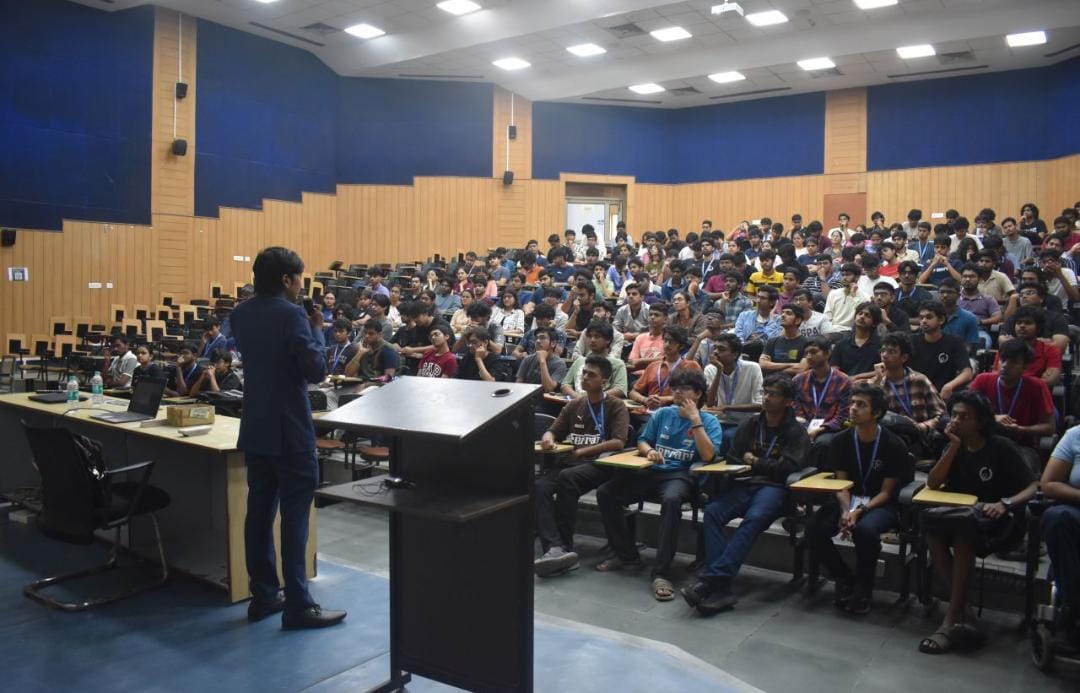
One of the most fulfilling experiences has been delivering employability and career transformation sessions for engineering, management, and postgraduate students, where we discussed critical thinking, communication, leadership, and career readiness through practical activities and case-based learning.
Conducting hundreds of mock interviews has also been incredibly rewarding because you can literally witness someone’s confidence grow within a single session.
When students later share that they secured internships, placements, or promotions because of those sessions, it reminds me why I chose this profession.
Interviewer: You have authored multiple books on career development. What inspired you to become an author?
Vishesh Jindal: Writing allows me to reach learners beyond the classroom.
My books focus on employability, training and placement, and the transition from academics to the corporate world. They are designed to simplify concepts and provide practical guidance that students can immediately apply in their careers.
I believe knowledge should be accessible, actionable, and relevant to real-life professional challenges.
Interviewer: What are the major challenges students face today?
Vishesh Jindal: The biggest challenge is not the lack of opportunities; it’s the lack of preparation.
Many students focus only on academic scores while overlooking communication, networking, adaptability, critical thinking, and professional behavior.
Another challenge is information overload. Students have access to endless resources online but often struggle to identify what truly matters.
My advice is simple: focus on developing skills, seek mentorship, embrace continuous learning, and consistently improve yourself rather than comparing your journey with others.
Interviewer: Your sessions often emphasize “Campus to Corporate Transformation.” What does that mean?
Vishesh Jindal: Campus to Corporate Transformation is about preparing students for the realities of professional life.
Success in the workplace requires much more than technical knowledge. It demands professionalism, communication, emotional intelligence, leadership, accountability, collaboration, and problem-solving.
When students understand these expectations before entering the workforce, their transition becomes smoother and their confidence increases significantly.

Interviewer: You are currently associated with the Indian Institute of Technology Guwahati. How has this experience shaped your professional journey?
Vishesh Jindal: Being associated with the Indian Institute of Technology Guwahati has been one of the most meaningful milestones in my professional journey. As a Personality Development Trainer with the Centre for Career Development, I work closely with undergraduate and postgraduate students to enhance their communication skills, interview readiness, critical thinking, and overall employability. Beyond conducting structured training sessions, I mentor students through mock interviews, group discussions, and career guidance initiatives, helping them build the confidence and professional competencies required in today’s competitive world. Working in such an intellectually vibrant environment has reinforced my belief that education should not only impart knowledge but also prepare individuals to lead with confidence, integrity, and purpose. It continues to inspire me to design impactful learning experiences that bridge the gap between academia and industry.
Interviewer: You have received numerous recognitions throughout your journey. Which achievements are you most proud of?
Vishesh Jindal: Awards are encouraging, but they are not my biggest achievement.
What truly matters to me is the impact created through education.
Over the years, I have delivered more than 50 invited talks, workshops, corporate training programs, and faculty development sessions. I’ve conducted over 500 mock interviews and career assessments while mentoring more than 3,000 learners across educational institutions, government initiatives, and industry platforms.
I’m also proud of leading successful placement initiatives, reducing recruitment cycle time through structured planning, securing record sponsorships for major university events, and contributing to both academic and professional development initiatives.
Ultimately, every student’s success story is the achievement I value the most.
Interviewer: What is your teaching philosophy?
Vishesh Jindal: I believe education should inspire transformation.
A teacher’s responsibility extends beyond completing a syllabus. We must encourage curiosity, ethical leadership, critical thinking, confidence, and lifelong learning.
I often say:
“I measure my success not by the number of sessions I deliver, but by the number of lives and careers I help transform.”
That philosophy guides every classroom session, workshop, mentoring conversation, and professional interaction.
Interviewer: What advice would you like to share with students and young professionals?
Vishesh Jindal: Never stop learning.
Degrees may open doors, but skills, character, discipline, and attitude determine how far you go.
Develop strong communication skills, read extensively, embrace constructive feedback, stay adaptable, and always maintain integrity.
Remember, your career is a marathon, not a sprint. Focus on becoming better every day, and success will naturally follow.
Interviewer: Finally, what are your future goals?
Vishesh Jindal: My vision is to contribute meaningfully to higher education, research, employability, and leadership development.
I aim to continue designing innovative learning experiences, mentoring future professionals, expanding MBAwaleBhaiya into a larger career development platform, publishing more books, conducting impactful research in Human Resource Management and employability, and strengthening collaboration between academia and industry.
If my work helps even one student discover confidence, purpose, and direction, I consider that a meaningful achievement.


